Marly Comic: A Display Font with Wit and Warmth
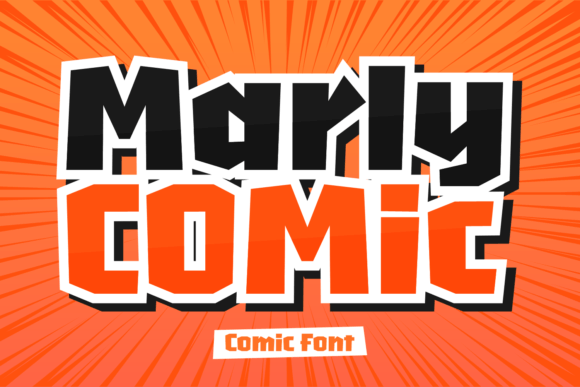
When you’re scrolling through a font library, you get a first impression within seconds. Marly Comic announces itself with a friendly handshake. It’s not a shy, delicate script or a stern, architectural sans. It feels like confident handwriting with a touch of theatrical flair—think of crisp, clear letterforms that have been drawn with a steady pen, but with just enough bounce in the curves to suggest a smile. The mood is approachable, upbeat, and slightly nostalgic, without being childish or overly cartoonish. It has the visual personality of a trusted guide: knowledgeable but never dry.
This personality makes it a natural candidate for projects that need to convey warmth and authenticity. It feels instantly human, which is a precious commodity in branding.
Where Marly Comic Finds Its Natural Habitat
In real project work, I’ve found Marly Comic thrives when given a starring role in visual communication. It’s a premium display font, and it demands that respect.
For logo design and brand marks, especially for businesses built on personal service—like specialty bakeries, independent bookstores, craft studios, or wellness coaches—it can form an incredibly memorable core. The letterforms are distinctive enough to ensure recognition, yet they carry a professionalism that avoids looking amateur. I’ve tested it on packaging design and product labels for gourmet food items and handmade goods; it lends a premium, artisanal feel that a cold sans serif could never achieve.
In marketing visuals, it’s a powerhouse for creating focal points. Website headers and key blog graphics gain immediate engagement. For social media graphics and digital ads, where you fight for microseconds of attention, Marly Comic’s distinctive shape makes your headline or key phrase stick. It works beautifully for posters, flyers, and invitations where the event has a personal or creative heart—a workshop, a local market, a book launch.
Beyond the Spotlight: Supporting Roles and Digital Uses
Its utility extends into the digital product space. For creators making Canva templates, printable products, or design assets for sale, Marly Comic offers a unique, commercially licensed voice that can differentiate a template pack. In editorial design, for pull quotes or section headers within a longer article, it provides a warm interruption to the body text flow. For Cricut projects and merchandise like t-shirts or mugs, its clear, well-defined outlines translate cleanly into physical cuts and prints.
The Necessary Constraints: Using It With Care
Like any strong personality, Marly Comic needs to be used thoughtfully. Its home is in large headlines and short phrases. It is definitively a display font. This isn’t a font for paragraphs, terms and conditions, or lengthy body copy. Its readability shines at larger sizes, but it falters if forced into small, dense text blocks. You’ll compromise clarity and that premium feel.
It excels as a decorative accent—a single powerful word on a premium packaging box, a key brand promise on a website hero section, a memorable quote in a social post. For supporting text, you must switch to something else. This is where your font pairing skills come in. Marly Comic’s character requires a strong, quiet partner.
The Real-World Impact on Brand and Audience
Choosing a font like this isn’t just about aesthetics; it’s a strategic decision. How does Marly Comic affect the practical outcomes of a project?
For readability in its proper display context, it’s excellent. The letters are open and well-spaced, not tangled or overly decorative. In terms of visual hierarchy, it commands attention instantly, making it easy to establish a clear primary focus in any layout.
For brand consistency, if your brand voice is friendly, expert, and hands-on, Marly Comic can visually lock that in. It builds audience trust by feeling human and genuine, not corporate and remote. That fosters engagement. The visual mood it sets is one of optimistic clarity, which can be incredibly effective for brands that want to demystify their craft or service.
However, it’s wise to consider the edge of professionalism. For a high-finance brand or a serious legal practice, it would likely feel too informal. Its strength is in creative, lifestyle, and personal-service sectors.
A Designer’s Practical Checklist for Marly Comic
Before committing Marly Comic to a client project or your own brand identity, run it through these real-world tests:
- Test it in black and white. Strip away color to see if the form holds its character. It does.
- Check small-size readability. Try it at 12px for a grim reality check. It’s not for that. Confirm its minimum effective size for your medium.
- Try it on real mockups. Drop it onto a photo of a product box, a website layout, or a social media post background. See how it interacts with textures and images.
- Compare uppercase and lowercase. The lowercase ‘a’ and ‘g’ have a lovely, distinctive shape. Sometimes the uppercase set can feel more formal; see which aligns with your mood.
- Review spacing. At large sizes, you may need to manually adjust tracking for perfect optical balance, especially in logos.
- Test it beside other font styles. Pair it with a clean, neutral sans serif font for body text. Contrast it with a classic serif font for a mix of warmth and tradition. Avoid pairing it with another script font or overly busy handwritten font; that creates competition, not harmony.
- Confirm commercial licensing. Absolutely verify your license covers your intended use—client work, digital product sales, or widespread branding. This is a non-negotiable step for any commercial font.
Final Judgment: A Font with a Specific, Powerful Charm
Marly Comic isn’t a generic tool. In the world of modern typography, it’s a specialist. It won’t solve every communication problem, but for the projects where its personality aligns—where you need to blend premium quality with human touch—it is remarkably effective. It avoids the hype and clutter of many creative fonts by being fundamentally legible and well-drawn.
My recommendation is to see it as a voice, not just a typeface. In your next project for a brand that values craft, connection, and clear-eyed optimism, give Marly Comic a test. Let it speak your headline, and see if its warm, confident tone resonates with the story you need to tell.